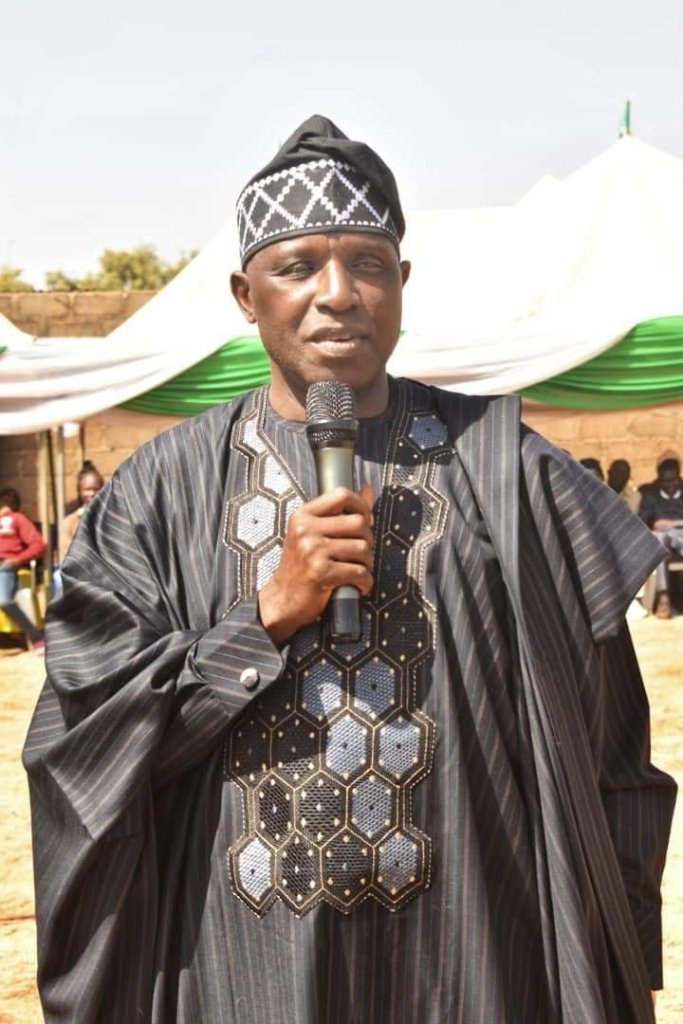
Sen. I. D. Gyang, Esq.
History is history, because of the documentation of notable and notorious events, occurrences, and happenings which are the acts of nature or men, including the good, the bad, and the ugly.
Documentation is what preserves dispensational events for future reference, and by it, subsequent generations learn what to embrace and what to avoid, what to do and what not to do, what is worthy of emulation and replication, and what is reprehensible, condemnable and repulsive.
The atrocious, mindless, and vicious killings, displacement and forceful occupation of ancestral homelands of host communities have characterised the Plateau landscape spanning over two decades. The intensity and devastating effect of occurrences are replete, perennial and unrelenting from location to location, and community to community.
It has been terror and horror, weeping and lamentation, condemnation and calls on the government to secure the vulnerable communities, to bring the atrocities to an end, and enforce law and order, to no avail.
Documenting these events marked by violent attacks, killings, mass burials, deserted ancestral homelands, internal displacement, forceful occupation, humanitarian crisis, etcetera, is not time-wasting, but very necessary.
Why so? For historical reasons! Historical reasons? Yes, so! The bad and ugly events can’t just be swept under the carpet. The plight of our generation and the atrocities meted out have precedents in history.
The Jews documented the atrocities of Nazi Germany. Rwanda documented her genocidal ethnic killings and built a museum to house the records as did the Jews earlier. So also the events of Apartheid South Africa. Many other cases abound in history. The records are available today because deliberate decisions were taken to that effect, making their preservation possible and accessible for future reference and learning.
Another reason for documentation is the accountability factor. The perpetrators of today’s atrocities may appear to be getting away with their evil acts, but history has shown that the evil that men and systems do, catches up with them years and decades later. Documenting and keeping records of atrocities, which constitute Human Rights abuse and violation, are necessary to hold perpetrators to account in the future.
Truth Commissions as witnessed in some nations, South Africa being an example where atrocities of the Apartheid regime came under scrutiny.
Rwandan reconciliation, restitution and forgiveness became a reality not by ignoring the atrocities of ethnic cleansing and genocide, but by confronting the perpetrators with records of their atrocious acts. It is to this end that the atrocities and lamentations of today on the Plateau should be, and are being documented.
Facts are notorious and will always speak in the future even if today fails and ignores to act appropriately and responsibly.
Meanwhile, we must note that the safety and well-being of the people is the foremost and primary constitutional responsibility of the government. Failing in a primary responsibility cannot be excused under any guise. History will also hold governments accountable for neglecting or refusing to undertake this primary responsibility responsively and responsibly, efficaciously and effectively.
I therefore urge the present government, particularly the Federal Government which has the monopoly of command and control over the armed forces and security agencies to do the needful, including supporting the Plateau State Government in ending the terror attacks, embedding community resilience, restoring peace, rebuilding and resettling displaced communities in their ancestral homelands among others. In so doing the government shall earn itself a salutary memorial in history.
It is worthy to acknowledge the role and effort of genuine peace initiatives, peace advocacy, peace making, and peace building on the Plateau by peace brokers and stakeholders. Indeed, history will reckon such good works.
Weeping, it is said, may endure for the night, but sooner than later, a new day approaches with healing and peace on its wings for Plateau State and Nigeria at large.
Senator I. D. Gyang, Esq.
 AL-HAU24news
Leave a comment