From Hauwa’u Mohammed
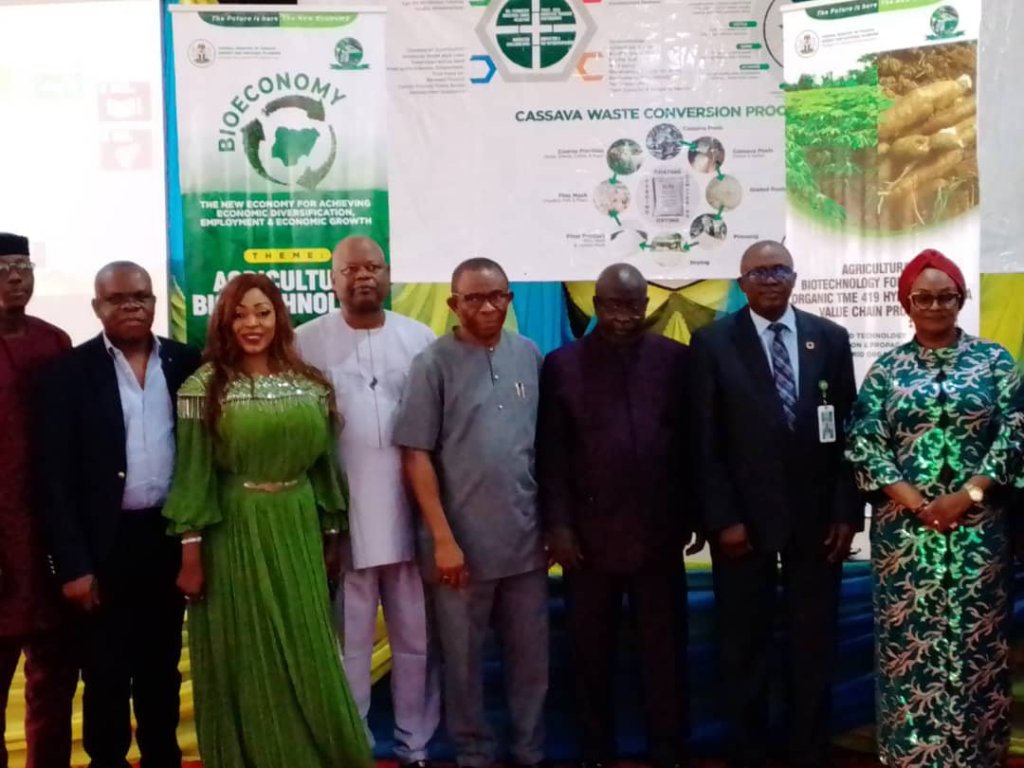
Federal Government reveals that is approaching the use of it’s Bioeconomy policy to drive inclusive economic growth, wealth creation, employment generation and sustainable poverty reduction in the country.
The Permanent Secretary Federal Ministry of Finance, Budget and National Planning, Prof. Nebeolisa Anako, made this known in Keffi local government area of Nasarawa state.
Represented by Dr Lanre Adekanye, Director, International Cooperation Department, FMFBNP (Budget and National Planning Arm) made the remarks at a North Central Regional Awareness and Sensitization Workshop on Bioeconomy, Employment and Inclusive Growth Using Cassava-Biothanol Value Chain Development Programme Pilot.
Our correspondent who was at the venue of the program reports that the theme of the workshop is “Knowledge Transfer: Cassava and Bio-Ethanol Value Chain.”
Prof. Anako, said one of the aspirations of the Federal Government is to bring about higher Gross Domestic Product (GDP) growth and to significantly reduce unemployment by creating meaningful opportunities for the youth in the country with Bioeconomy as a viable option to achieve that.
He explained that the Bioeconomy Policy aims at promoting sustainable and inclusive economic growth and development by creating a Bio-based economy that will contribute to the job creation, poverty reduction, and increased access to food and energy.
“The country, at this time, needs an approach that will increase food production, youth employment, and increased growth through the provision of industrial feedstock and exportable products to boost our economy. To achieve this, one strategic pathway is to develop the Cassava Bio-ethanol Value Chain.
“I would like to thank stakeholders from relevant Federal Ministries, Department and Agencies (MDAs) for their collaboration and enduring partnership thus far in developing the Bio-economy Policy, which is a Ministerial deliverable that was captured in the National Development Plan (NDP) 2021 – 2025,” he said.
Anako pointed out that in driving the Bio-economy policy to decelerate the rising food insecurity in the country, an approach is needed that will increase food production, youth employment, and increased growth through the provision of industrial feedstock and exportable products to boost our economy.
“To achieve this, one strategic pathway is to develop the Cassava Bio-ethanol Value Chain. This becomes even more imperative, given the recent removal of subsidy on Petroleum products, re-evaluation of the Naira through the merging of official and non-official exchange windows.
“Development of the Bioeconomy value chain is a veritable pathway to assuage the economic impacts on citizens and for sustained development,” he said.
On his part Prof. Suleiman Bala-Mohammed, Vice Chancellor, Nasarawa State University, Keffi (NSUK) lauded the workshop and it’s theme which he said reflected the pressing need to harness the power of Bioeconomy, particularly in the context of the North Central Region.
“North Central Nigeria has a rich agricultural heritage and cassava stands as one of the our most vital and versatile crops and it is crucial that we capitalize on these resources to unlock economic opportunities, create jobs and foster inclusive growth.
“The cassava-bioethanol value chain holds tremendous promise in this regard as it integrates various sectors from agriculture to energy and entrepreneurship,” he said.
While answering question from Journalists, Managing Director of Bio sources and Technology Limited Prof. Ken Ife, Managing stated that Bioeconomy knowledge based production and use of molecular biology of plant and animal origin and processes to create a wide range of products across all sectors of the economy.
He further explained that huge potential in cassava made it a natural choice to start the implementation of the Bioeconomy policy with the partnership of the academia, Research and Development Institutes, farmers, private sector and government MDAs as well as the Civil Society, Development Partners and Development Finance Institutions.
 AL-HAU24news
Leave a comment